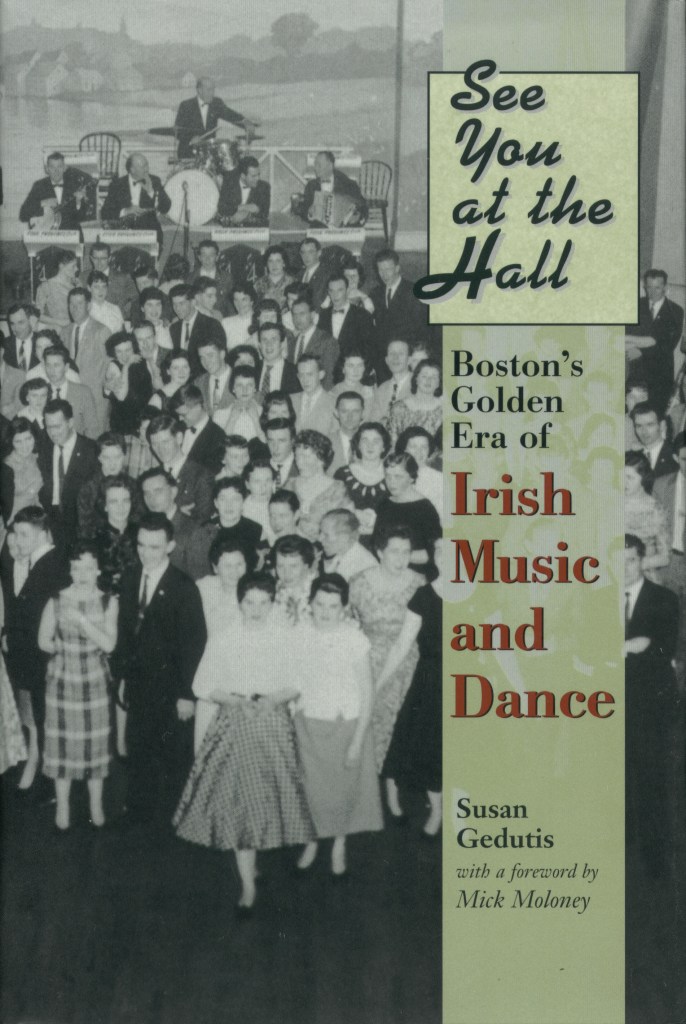
About the Book
From the 1940s to the mid-1960s, on several evenings a week, thousands of Irish and Irish Americans flocked from miles around to the huge, bustling dance halls—the Intercolonial, the Hibernian, Winslow Hall, the Dudley Street Opera House, the Rose Croix—that dotted Boston’s Dudley Square. For the city’s Irish population, the Roxbury neighborhood, with its ballrooms and thriving shopping district, was a vital center of social and cultural life, as well as a bridge from the old world to the new.
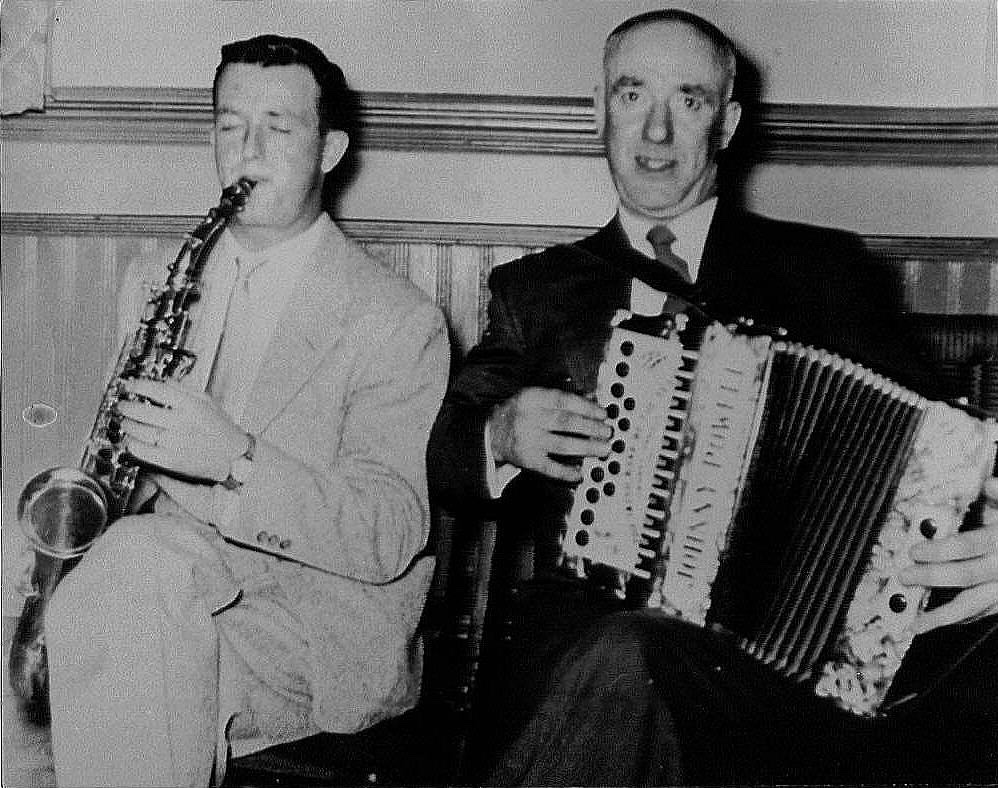
See You at the Hall brings to life the rich history of the “American capital of Galway” through the eyes of those who gathered and performed there. In this engaging look back at Boston’s golden era of Irish traditional music, Susan Gedutis deftly weaves together engaging narrative with spirited personal reminiscences to trace the colorful dance hall period from its beginnings in 1940s Roxbury, when masses of young Irish flooded Boston following World War II, through its peak years in the 1950s, to its decline in the 1960s, when reduced immigration, urban social upheaval, and a shift in neighborhood demographics brought an end to the heyday of Irish dance hall music in Boston. After the last dance hall closed, Dudley Square musicians moved from the big ballrooms to pubs, social clubs, and private parties, preserving the music and passing it on to younger generations of Irish performers.
“Susan Gedutis has created a highly readable, very enjoyable, and historically important memoir of this era… a loving, sensitive recreation of a scene that will never be witnessed again… [The] interviews alone are a treasure trove, but the author has given them a beautiful and understandable context within which to more fully appreciate them… See You at the Hall puts Boston on the map with other large Irish cities and it will be of interest on both sides of the Atlantic for those concerned with Irish culture in all its many forms. It is very accessible for those without formal training, yet at the same time it will be of tremendous value to researchers both now and in the future. Northeastern University Press must be commended for publishing this book.”—H-Net URBAN Digest
 Susan Gedutis Lindsay